

Government plans to spend up to Shs70 billion on climbing ladders, boardwalks, resting shelters and tourist camps in the Rwenzori Mountains. The plan aims to make one of Uganda’s most demanding and storied landscapes safer and more comfortable as visitor numbers rise.
The Ministry of Tourism, Wildlife and Antiquities is also looking beyond the peaks. It wants to build a coffee tourism offering in Kasese, hoping visitors will stay longer and spend more in the communities around the mountain.
Reaching the high Rwenzori has never been easy. Climbers face steep terrain and difficult routes, often with few places to rest and little shelter from freezing temperatures at altitude.
The terrain is extreme. Rwenzori Mountains National Park covers 99,600 hectares, 70% of it above 2,500 metres, and includes Margherita Peak at 5,109 metres, Africa’s third-highest mountain after Kilimanjaro and Mount Kenya. Its size and altitude, which UNESCO says make its alpine zone much larger than that of either rival, are exactly why the trails are hard to build and maintain.
Doreen Katusiime, the Permanent Secretary in the Ministry of Tourism, Wildlife and Antiquities, said the works are meant to address those difficulties directly.
“The government is investing in tourism infrastructure in the Rwenzori Mountains to improve accessibility, safety and the comfort of climbers. The works include climbing ladders, boardwalks, resting shelters and tourist camps along routes leading to the mountain peaks,” she said.
The investment follows strong growth. George Businge, senior warden of Rwenzori Mountains National Park, said visitors rose from 7,703 in the 2023/2024 financial year to 10,483 in 2024/2025, an increase of about 36 per cent.
“This growth demonstrates the park’s tourism potential and the need to continue improving infrastructure and facilities for visitors,” he said.
The park’s growth is part of a wider national recovery. International arrivals to Uganda rose 19.7 per cent to 1,642,215 in 2025, surpassing pre-pandemic levels, according to the ministry’s Tourism Statistical Abstract 2025. Tourism earnings reached Shs5.8 trillion (about US$1.62 billion), and the sector contributes an estimated 5.9 per cent of GDP while directly supporting more than 876,000 jobs, about 7.5 per cent of national employment.
By that yardstick, the Shs70 billion for the Rwenzori is roughly 1.2 per cent of what the whole sector earned in a single year.
More than a mountain
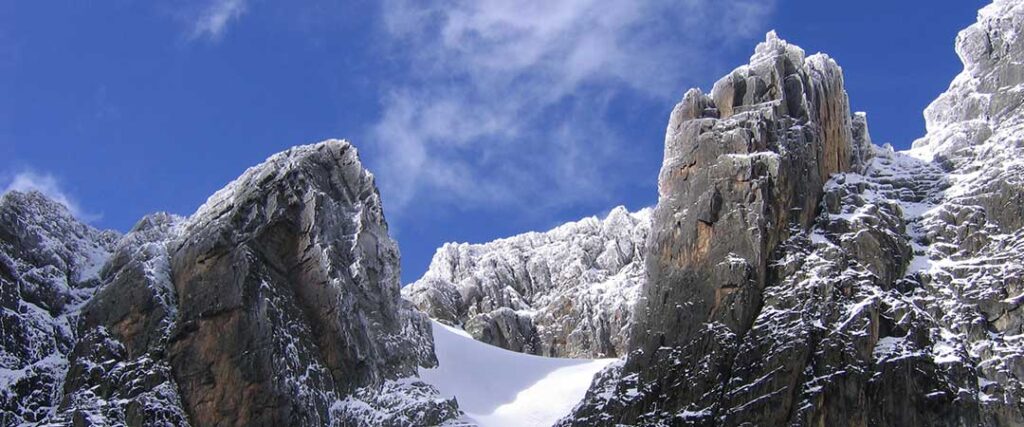
The Rwenzori is not only a tourist attraction; it is also a UNESCO World Heritage Site, a vital water source, and a habitat for rare species. The park was designated in 1991, recognised as a World Heritage Site in 1994, and designated a Ramsar site in 2008. It serves as an essential catchment area, feeding rivers that flow into Lake Albert and the Nile. A report on the national park states that over five million people rely on this catchment for their livelihoods.
The park is home to 102 recorded mammal species. Notably, the Rwenzori duiker is found nowhere else in the world, and the Rwenzori colobus monkey is unique to the park. Additionally, it boasts the richest montane flora of any site in Africa, featuring giant groundsels and lobelias. The history, culture, and beliefs of the Bakonzo people are intricately connected to these mountains.
There is an urgent concern. The Rwenzori glaciers have shrunk dramatically, from 6.5 square kilometres in 1906 to under one square kilometre by 2003. Projections indicate that they may disappear before the end of this century. For many visitors, the opportunity to see equatorial ice may be a fleeting attraction, further emphasising the need to invest in improved access to the area now.
Why coffee?
Uganda has a tourism problem the Rwenzori investment partly addresses. Only 13 per cent of international arrivals in 2025 came for leisure or holiday, and the National Development Plan IV cites Uganda’s narrow product range as a barrier to growth. Most visitors are not on holiday, and holidaymakers tend to spend more per trip.
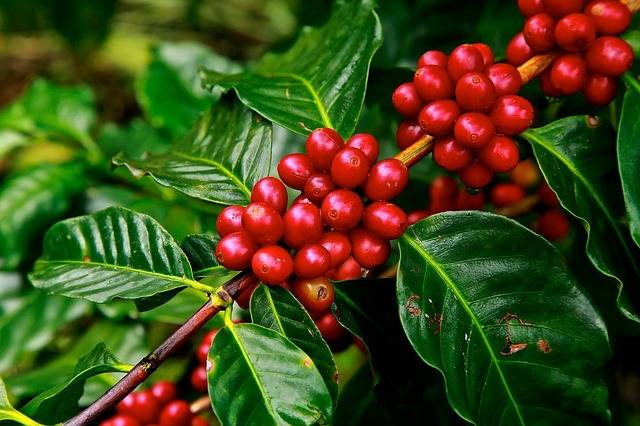
That is where Kasese’s coffee comes in. Katusiime said the ministry wants to put coffee tourism alongside the Rwenzori Mountains and Queen Elizabeth National Park.
“Coffee tourism in Kasese presents an opportunity to give visitors more experiences, encourage them to stay longer and increase spending within local communities,” she said.
The plan is to link tourists with coffee-growing communities, who would show them how the crop is produced. The ministry hopes that a longer stay will bring more spending on accommodation, transport, food, guiding and locally made goods.

