
Concession income exceeded its target by more than three times, but an 8.3% drop in visits showed how exposed Uganda’s wildlife economy is to a health scare.
Visitors to Uganda’s parks fell by 78,032 last financial year. Even so, the Uganda Wildlife Authority (UWA) collected Shs16.4 billion from private operators running lodges, campsites and restaurants on protected land. The target was Shs5 billion, so the Authority beat it by 3.3 times.
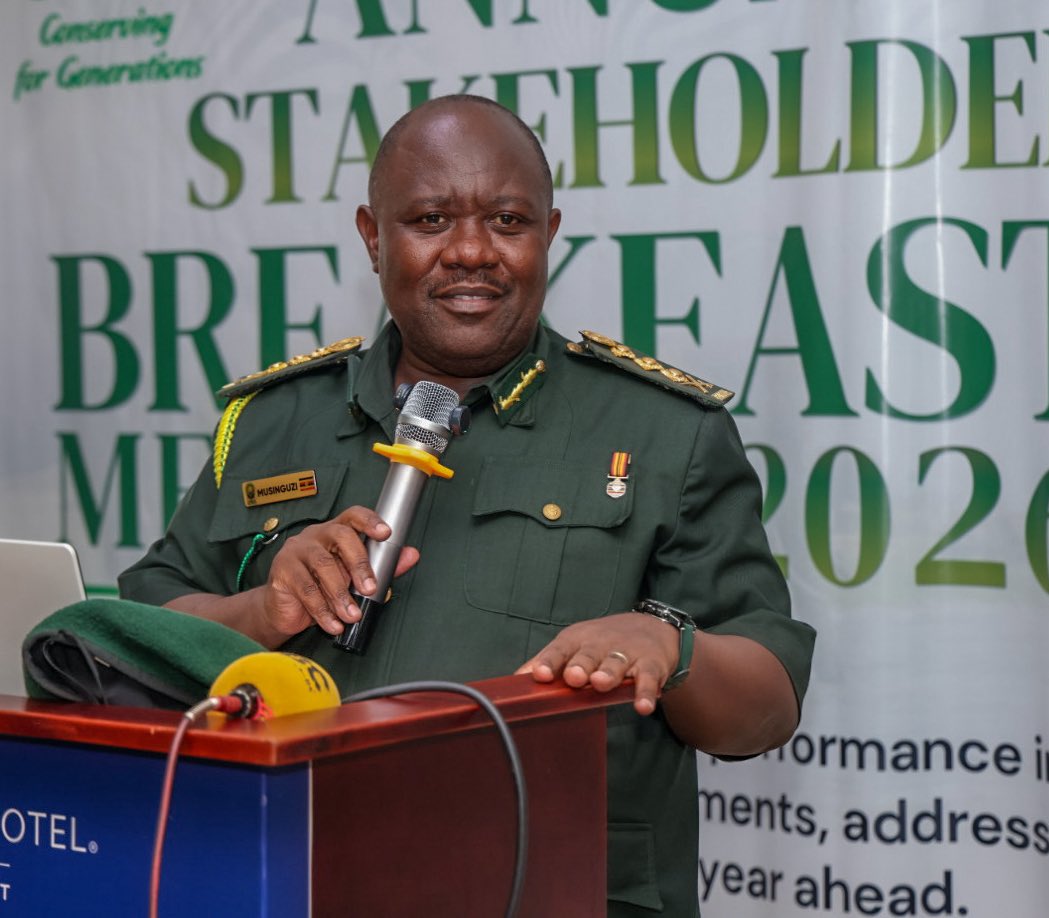
Executive Director James Musinguzi presented the figures at the 2026 Annual Stakeholder Breakfast Meeting at Skyz Hotel in Naguru. He framed the year as one of progress on several fronts.
“The financial Year 2025/26 marked important progress in Uganda Wildlife Authority’s delivery of its wildlife conservation mandate, with notable achievements in ecosystem restoration, wildlife protection, species reintroduction, community conservation and tourism development,” Musinguzi said.
Investors had a good year, but the Park gates had a hard one.
Visits to protected areas and wildlife education facilities totalled 865,805, down from 943,837 in 2024/25. UWA blamed Ebola outbreaks and negative travel advisories, which led tourists to cancel permits and bookings.
The mix of visitors was telling. Students led with 323,060 visits, which is about 37% of the total. East African residents made 296,960 visits, and foreign non-residents made 184,943. In other words, the parks leaned heavily on schoolchildren and regional travellers in a year when long-haul visitors stayed away.
The concession windfall points to a different strategy. Musinguzi credited better concession management, tighter compliance monitoring and renegotiated agreements with private operators. Concession revenue is the fee that investors pay UWA to run tourism facilities inside protected areas.
That approach has been building for some time. UWA signed three concession agreements in March 2025 for high-end tourism infrastructure in Murchison Falls, Queen Elizabeth and Kidepo Valley national parks. In December 2024, it granted a 25-year concession for a luxury lodge at Channel Track near the Kazinga Channel. Musinguzi has been open about the logic. He told concessionaires in April 2025 that when their businesses thrive, UWA earns more revenue.
The pipeline is still growing, because UWA prepared 19 concession opportunities and identified 18 investment sites. Whether they turn into revenue will depend on investor uptake, implementation and visitor demand.
Gorilla Permits Still Carry Most of the Revenue
Concessions are a small slice of UWA’s income, and gorilla permits remain far larger. The Monitor reported that gorilla tourism earned Shs110 billion in 2025/26, part of Shs162.5 billion from Bwindi and Mgahinga combined. UWA has also set its sights on a bigger prize, with a Shs290 billion target for 2026/27.
Seen that way, the Shs16.4 billion is a proof of concept for private investment in the parks. It is not yet a replacement for permit income, and visitor numbers still decide how large the overall revenue pool becomes.
Rhinos Have Returned to Northern Uganda
The year’s most visible conservation moment was the reintroduction of eight southern white rhinos to Ajai Wildlife Reserve and Kidepo Valley National Park. The species had been locally extinct in both landscapes.
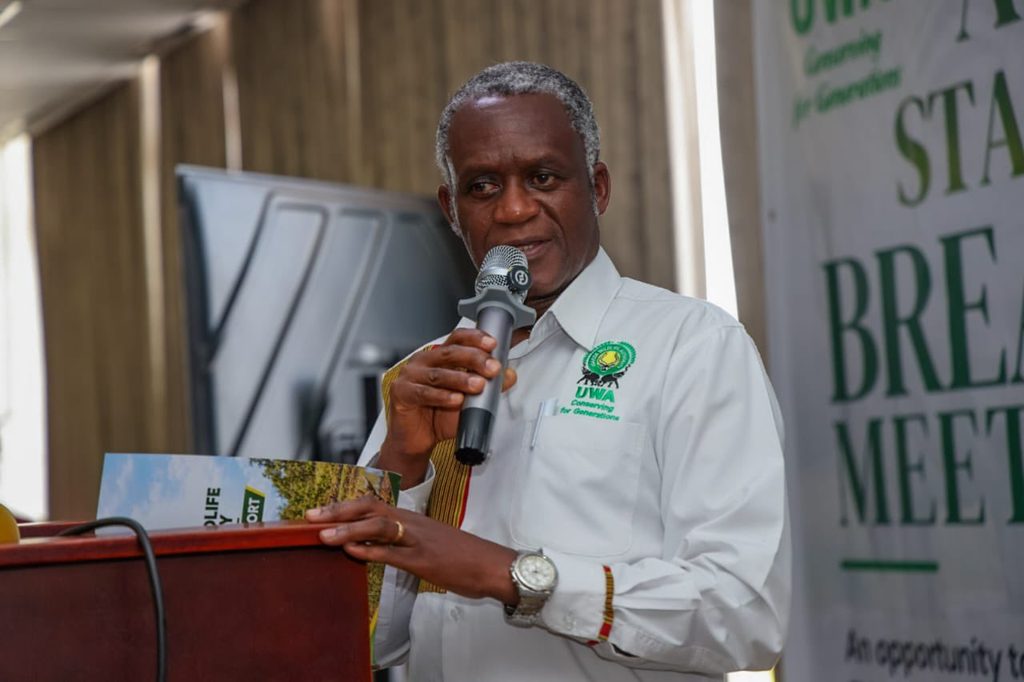
Board Chairman Professor James Kalema called it historic. “Of particular significance was the historic reintroduction of southern white rhinos to Ajai Wildlife Reserve and Kidepo Valley National Park, marking a major step in rewilding wildlife populations and securing Uganda’s biodiversity for future generations,” Kalema said.
The rhinos could become a new draw for the two areas, but only if habitat management, security and visitor infrastructure keep pace. In May 2026, UWA also took over management of Bugoma Central Forest Reserve, which added to its responsibilities. The year’s work followed three new documents, which are the Strategic Plan for 2025/26–2029/30, the Service Delivery Standards and the Client Charter. “These key policy documents are guiding our work for efficiency and effectiveness,” Musinguzi said.
UWA Reclaimed Large Areas of Degraded Land and Boundary
The habitat figures were large. The land under management for invasive and problematic plant species grew from 4,299.97 hectares to 7,464.94 hectares, an increase of 3,164.97 hectares, or 73.6%. That was 175% of the annual target of 4,268.23 hectares. UWA also restored 60.25 hectares of degraded habitat.
Boundary work grew even faster. UWA maintained 1,213.1 kilometres of protected-area boundaries, against 400.3 kilometres the year before. That is an extra 812.8 kilometres, or about 203%.
Crews also established 81.2 kilometres of live boundary markers. They planted 50 kilometres in Murchison Falls National Park and 12 kilometres in Pian Upe Wildlife Reserve. They added seven kilometres along the Bwindi-Sarambwe boundary and six kilometres in Mgahinga Gorilla National Park. UWA also installed 19 new boundary pillars in Murchison Falls, Lake Mburo and Kibale, and it maintained 20 more in Kibale.
Crime and Conflict Fell Short of Being Solved, but Community Payouts Continued
Rangers ran 25,621 patrols, apprehended 2,931 suspects and recovered 43,642 illegal hunting and related implements. UWA also progressed 1,237 wildlife crime investigations involving 2,189 suspects. A further 1,362 newly recruited rangers were still in paramilitary and conservation training at the end of the year.
Reported human-wildlife conflict incidents fell from 6,557 to 4,290, a drop of about 35%. The problem is still serious for farmers living beside the parks, because animals destroy crops, threaten livestock and endanger lives.
UWA backed 1,282 livelihood groups, held 2,421 community meetings and paid out Shs5.51 billion through revenue sharing. Kalema said, “The Board takes pride in ensuring that communities neighbouring Protected Areas derive tangible benefits from conservation.” He added, “Sustainable conservation must contribute to improved community wellbeing and socioeconomic transformation.”
The Next Test Is Winning Back the Visitors
UWA still names inadequate resources, habitat degradation, wildlife crime, human-wildlife conflict and poor communication connectivity as constraints. The Ebola scare showed how quickly bookings can disappear.
Musinguzi’s plan for the coming years leans on the new strategy. “Our focus in the coming years will be on effective implementation of the UWA Strategic Plan 2025/26-2029/30, with emphasis on strengthening wildlife protection, restoring degraded ecosystems, mitigating human-wildlife conflict, improving tourism competitiveness and increasing the benefits that neighbouring communities derive from conservation,” he said.
The year’s numbers show an authority that can bring in private money and restore land. What remains to be seen is whether it can win back the visitors who stayed home and turn that into earnings that communities can feel.