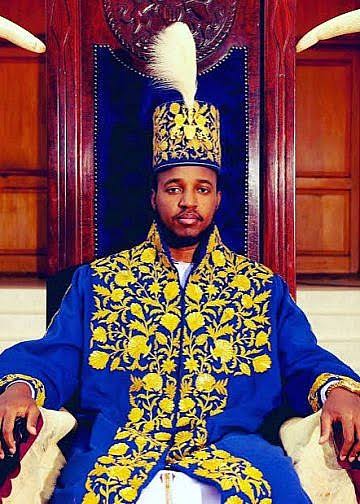

By the time King Oyo Nyimba Kabamba Iguru Rukidi IV reached the summit of Margherita Peak of Mountain Rwenzori, he was no longer simply the boy who had inherited a crown at three.
Many Ugandan millennials across the country can attest to the fact that his mere existence was an assured red pen mark in the Primary School Social Studies paper if the famous question was set: Who is the youngest king in Uganda/world?
The young King was just 30 years into a reign that begun in tragedy, but had grown one of Uganda’s most recognisable cultural institutions, Tooro Kingdom.
Standing 5,109 metres above sea level on the Rwenzori Mountains, the Omukama of Tooro used the symbolism of the crown and his royal gowns for something larger than ceremony, but to draw attention to a landscape, a tourism economy and an environmental crisis that he believed Uganda could not afford to ignore.
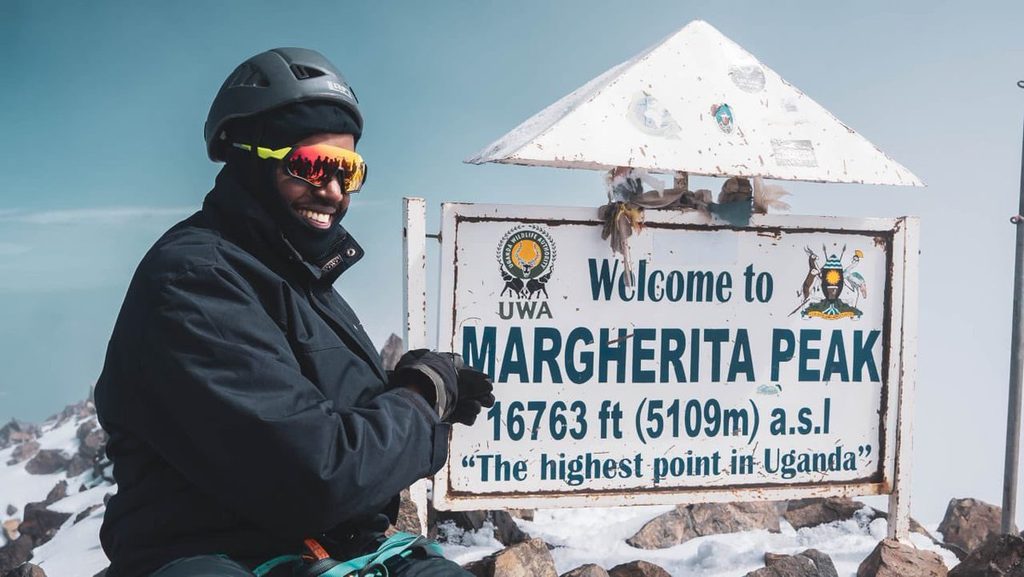
That expedition, in August 2022, would become one of the clearest expressions of King Oyo’s public life, not merely sending a message about the Rwenzoris, but he climbed them.
The Uganda Tourism Board, then, described the 10-day Royal Rwenzori Expedition as an effort to promote sustainable adventure tourism while highlighting the beauty of the Rwenzori Mountains, the effects of climate change and the importance of conserving mountain ecosystems.
The expedition took the King and his team to the Margherita Peak, Uganda’s highest point and for a monarch whose kingdom sits in one of Uganda’s richest tourism landscapes, the choice was revealing.
The lion of Tooro understood that his kingdom’s greatest tourism assets were not confined to palaces and royal ceremonies but in the mountains, forests like Kibaale, crater lakes, caves, wildlife corridors, tea plantations and the cultural memory of the Batooro people.
His death on August 27, 2026, at the age of 34 does not only closes a remarkable royal chapter but also marks the passing of a young cultural leader who presented Tooro as a destination where heritage, adventure, conservation and community could meet.
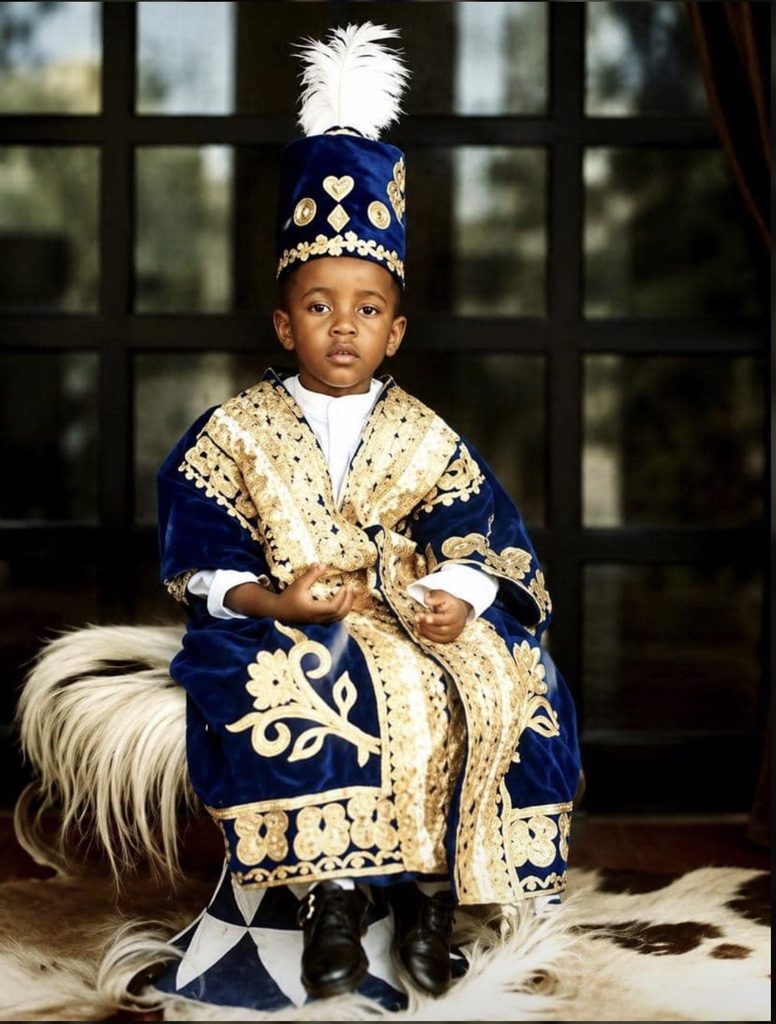
Oyo was born on April 16, 1992 and on September 12, 1995, following the death of his father, Omukama Patrick David Matthew Kaboyo Olimi III, he ascended the throne of Tooro at just three years old.
He became the world’s youngest reigning monarch, a distinction that brought international attention to a Ugandan child who was still learning to read and write while carrying one of country’s oldest cultural institutions on his shoulders.
Because of his age, a council of regents guided the kingdom during his childhood.
Among those associated with his guardianship was President Yoweri Museveni, alongside Queen Mother Best Kemigisa, Princess Elizabeth Bagaaya and Buganda’s Kabaka Ronald Muwenda Mutebi II.
But Oyo’s story eventually became less about the novelty of a child king and more about the adult monarch he became.
His official crowning came in 2010, after he reached adulthood and over the following years, he increasingly used his platform to speak about youth, culture, environmental conservation, education, peace and tourism.
The kingdom had inherited an extraordinary natural and cultural endowment, but Oyo’s generation faced a different tourism marketplace, one in which destinations compete not merely on scenery but also on stories.
And well, Tooro indeed had a story.
In July and August 2022, he led the Royal Rwenzori Expedition to Margherita Peak, a journey that was designed to raise awareness about climate change and the conservation of the mountain ecosystem, while positioning mountaineering as a tourism product.
“I led a team up the Rwenzori Mountains to help justify the claim that Uganda is truly the Pearl of Africa,” he said.
The quote was not simply about bringing foreigners into Uganda, but also largely about convincing Ugandans themselves of the extraordinary places they possessed.
The Uganda Tourism Board worked with Tooro Kingdom, the United Nations Development program (UNDP) and other partners on the expedition under a campaign focused on conserving mountain ecosystems and promoting sustainable adventure tourism.
The symbolism became even more powerful because Oyo himself was the attraction, for a king climbing a mountain made the conservation message difficult to ignore.
Oyo also trekked in Bwindi Impenetrable National Park to see Uganda’s mountain gorillas, an experience that reinforced his public advocacy for conservation and domestic tourism.
In 2025, after a gorilla-tracking expedition, he spoke strongly against encroachment on conservation areas and called for Ugandans to embrace domestic tourism as a way of understanding and appreciating the country’s natural heritage.
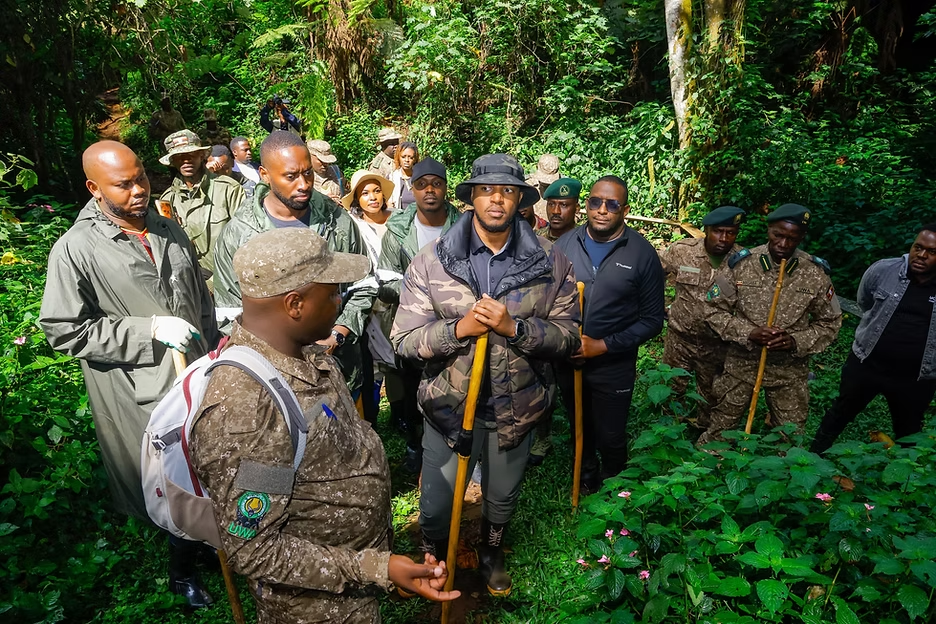
His message was particularly significant in this, our country, where tourism has traditionally depended heavily on international visitors.
The kingdom’s centre, Fort Portal, sits within a remarkable tourism circuit. From the city, visitors can reach the Rwenzori Mountains, Kibale National Park, Semuliki National Park, Amabere Ga Nyina Mwiru caves and numerous crater lakes.
The Tooro Kingdom itself identifies Fort Portal as its cultural heart and a gateway to some of Uganda’s major natural and cultural attractions, and without much debate was named the tourism city.
To understand Oyo’s tourism legacy, one has to understand Tooro itself.
Fort Portal is not merely an administrative centre but a gateway to a region where culture and nature sit unusually close together.
There is Karuzika Royal Palace on Karuzika Hill, the Karambi Royal Tombs, and the legendary Amabere Ga Nyina Mwiru caves.
As if God was not generous enough, the area is dotted with crater lakes and beautiful tea plantations surrounding the city.
Let us not forget the Kibale National Park, famous internationally for chimpanzee tracking or the Semuliki National Park with its hot springs and lowland forest.
And there are the Rwenzoris, the “Mountains of the Moon” rising dramatically along Uganda’s western frontier.
Oyo was therefore sitting at the centre of an unusually valuable tourism proposition, a cultural custodian of a kingdom whose geography was itself a tourism advertisement.
His contribution, to those who knew him, was to increasingly connect the two and make culture part of the tourism economy.
The royal institution, the language, clans, traditional ceremonies, music, dance, food, history and architecture all form part of the visitor experience.
That became particularly visible during the 30th anniversary of his reign in 2025, when Tooro staged the Empango celebrations and the Ekyooto Ha Mpango festival in Fort Portal.
The festival brought together music, culture and community around the royal celebrations and was promoted as part of the region’s tourism appeal.
For years, Uganda’s tourism marketing has been dominated by images of gorillas, lions, elephants and landscapes.
Oyo’s Tooro offered another proposition however, come for the mountains, the caves and the parks, stay for the culture.
Perched on Karuzika Hill overlooking Fort Portal, his palace too has become one of the city’s most recognisable landmarks and a physical expression of Tooro’s royal history.
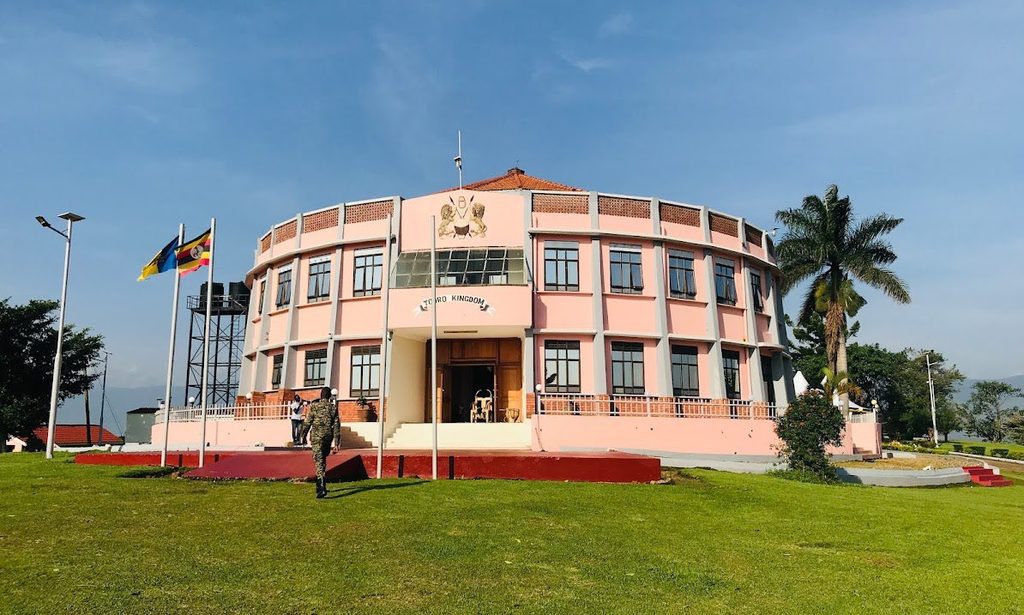
The King always presented environmental conservation as a responsibility of leadership, each time with a clear message that tourism cannot survive if the landscapes on which it depends disappear.
He told us that the mountains, forests, wildlife corridors all need protection and that communities around protected areas need to benefit.
Tourism, he emphasized, must become sufficiently valuable to give conservation a practical economic argument.
Under his leadership, Tooro kingdom listed environmental conservation, cultural tourism, youth empowerment and community development among its top priorities.
Just last year in May, the fallen King, in a bigger push to reposition Fort Portal and the wider Tooro region, met President Museveni for deliberate discussions on tourism development, the expansion of the existing aerodrome into a fully-fledged airport and construction of a new stadium.
Infrastructure development was therefore part of his tourism strategy for his kingdom needed roads, air connections, accommodation, attractions, conservation and cultural programming to work together.
But as if that was not enough, the young Lion pushed so much for girl-child education, women’s empowerment, peace-building, environmental conservation and youth participation, which all matter for tourism.
Tourism is one of the sectors through which young people can become guides, conservationists, hospitality workers, entrepreneurs, artists, cultural performers and storytellers.
In a region with such a rich tourism base, Oyo’s emphasis on youth participation had the potential to turn heritage from something inherited into something economically useful for a new generation.
When he climbed the Rwenzori, the mountain got a louder story, when he trekked the gorrillas conservation got a royal advocate, when he hosted cultural celebrations in Fort Portal, Tooro’s traditions became part of our tourism calendar and when he appeared at Karuzika Palace, the palace itself became part of the visual identity of Fort Portal.
In an age when destinations are marketed through personalities, images and experiences, Oyo became one of both Tooro’s and Uganda’s most recognisable ambassadors.
All of us at Karibu Travel Magazine send our condolences to the People of Tooro, may the King’s soul rest in peace.
Omukama Atulize. Enkuba Etutire.