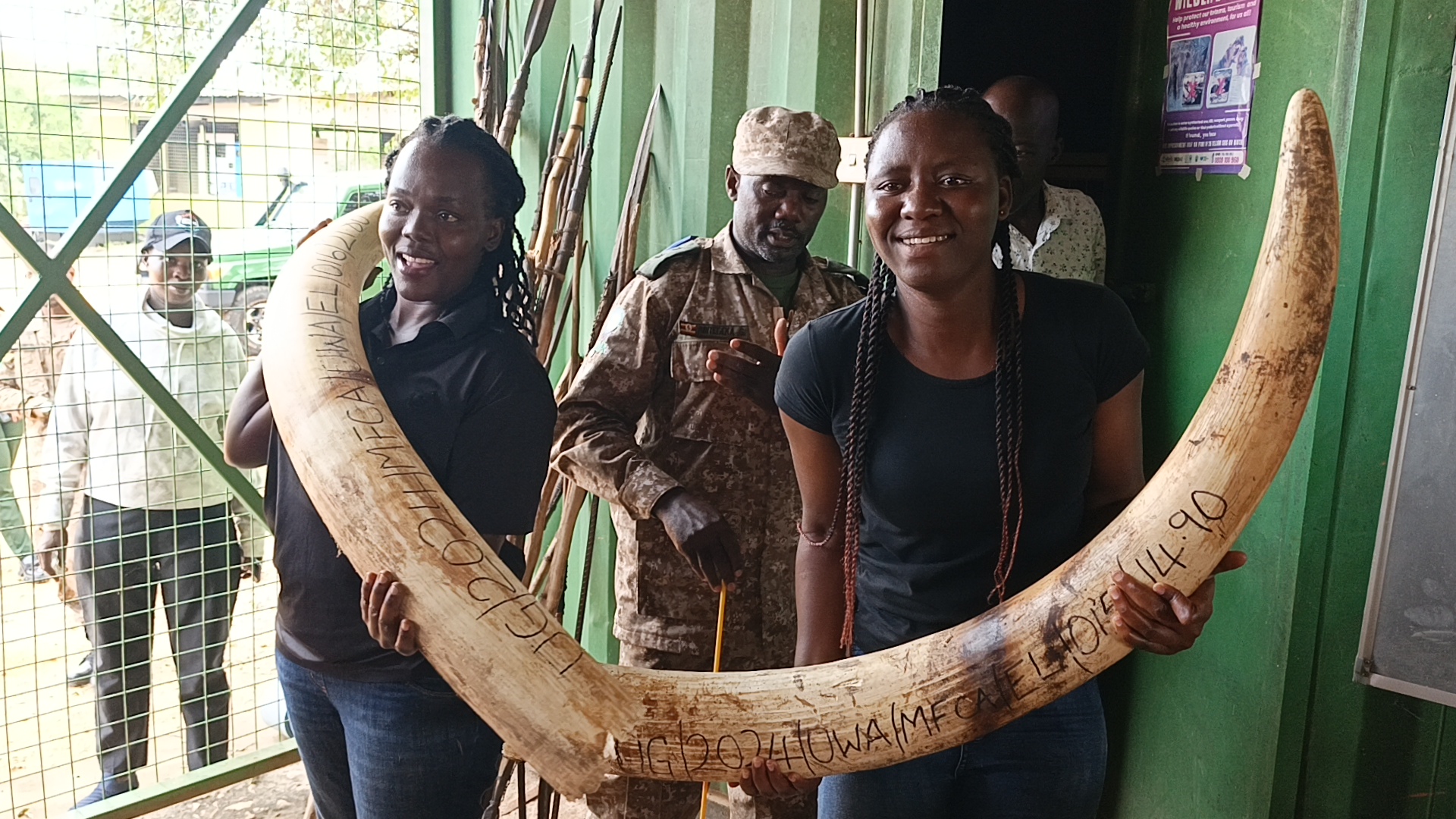

Inside and around Uganda’s biggest conservation areas the Murchison Falls National Park, located in the north of the country the battle to conserve one of Uganda’s richest ecosystems is increasingly evolving into one to protect human lives, livelihoods and the fragile relationship between people and wildlife.
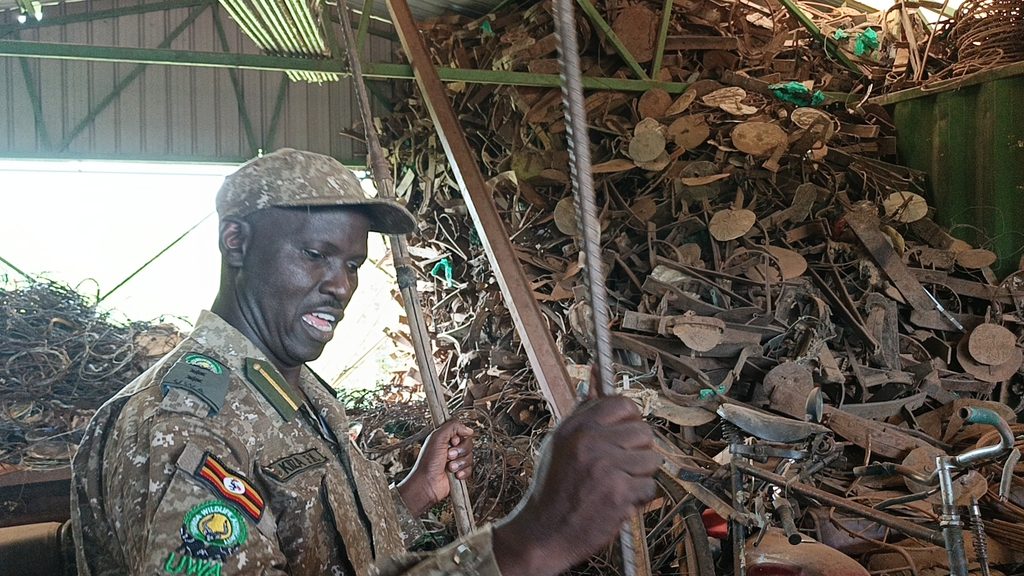
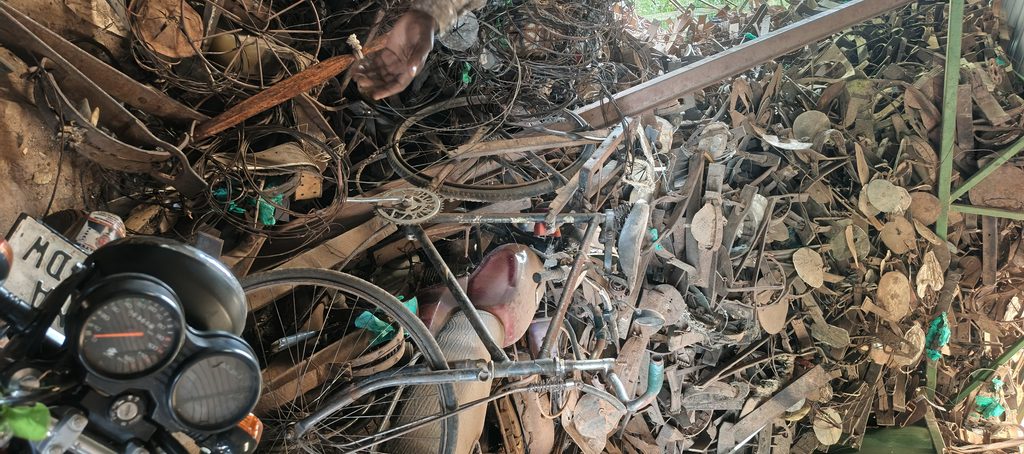
Inside the park, a strange silence hovers in the Snare House at the Uganda Wildlife Authority centre. The long room’s walls are dotted with rusted wires, broken spears, torn fishing nets and other remnants of a hidden war.
At first glance, they look like scrap, discarded objects left behind by time but they are not.
They are evidence.
Each object here is a reminder of an animal that was hunted, trapped or lost and a stark record of the pressures confronting one of Uganda’s most treasured natural landscapes.
“These are hunting gears. They show the level of destruction poaching can cause to this ecosystem,” says Kizza Fred, the Chief Warden of Murchison Falls National Park.
A general glimpse of the vast park from afar might not tell this story, as it seems almost untouched.
The River Nile cuts through the park’s landscape with ancient determination, its waters linking savannah, woodland, wetlands and riverine forests.
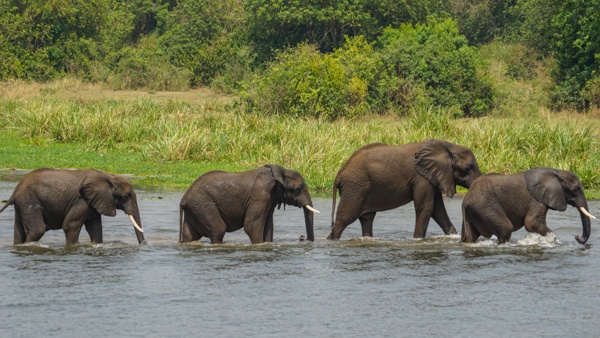
Elephants, Buffalos, Giraffes and Antelopes wander across open plains, while Lions and Leopards stalk through the grass and trees, respectively.
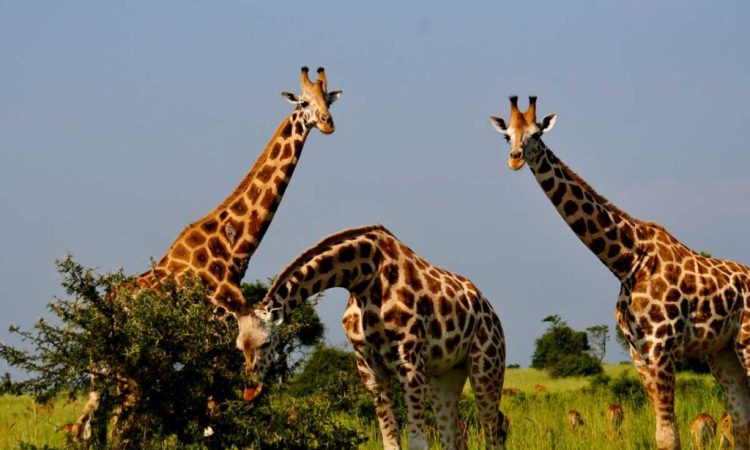
The park also has hundreds of bird species, reptiles and aquatic life occupying their own niches in an intricate web of survival.
Murchison Falls Conservation Area is not simply a park but a living system spread across seven protected areas, bound together by the Nile.
“Everything here is connected. The river, the grasslands, the animals when one is affected, the entire system feels it,” Warden Kizza noted.
But that delicate connection is being tested by another story unfolding at the boundaries of the park, where the wilderness meets farmland and homesteads.
In Nwoya District, elephants are moving along ancient migration routes and entering communities in search of food. For people who depend on their gardens for survival, the arrival of an elephant herd can turn a night of guarding crops into a life-threatening encounter.
Within one week, two men were killed while guarding their crops at night.
“We are scared. We cannot sleep. The animals come every night,” says one community member.
For families living along the park boundary, the cost of human-wildlife conflict is measured not only in damaged crops, but in grief, destruction, fear and uncertainty.
This conflict has become serious enough and is pushing conservation authorities to rethink how the boundary between people and wildlife is managed.
Several interventions have come up over the years, like digging trenches and rearing bees, all at the boundary between the park and the community, but the problem has only been partially dealt with.
“We realized trenches were not effective. Elephants could cross them. And so we opted for electric fencing, which is proving to be the most reliable solution,” Kizza says.
UWA’s latest State of Wildlife Resources report says 91 kilometres of electric fencing had been completed around the Murchison Falls Conservation Area by December 2025, with further expansion planned.
The authority has also reported that electric fencing, together with complementary measures, has helped reduce human-wildlife conflict.
In Nwoya alone, UWA has previously reported 64 kilometres of fencing completed, while plans were announced for an additional 20 kilometres following fatal elephant attacks on community members.
For communities that have spent nights sleeping in gardens to protect crops, the fence represents the possibility of sleeping at home again.
“Now our husbands sleep at home. Before, they stayed in the gardens to guard crops against the elephants,” a community woman says.
For years, the burden of protecting crops often fell directly on families, while rangers and community scouts struggled to respond to wildlife incursions across vast landscapes.
UWA has therefore increasingly embraced a combination of electric fencing, community wildlife scouts, conservation education and other deterrents to reduce encounters before they become deadly.
But the fence cannot solve every problem, as beyond the boundaries of human settlement, the ecosystem faces threats of its own, including poaching, which continues to remove key species from the food chain, driven by demand for bush meat, ivory and other animal products.
Inside the Snare House, the rusted wires and broken weapons stand as silent witnesses to that continuing pressure.
“As long as people continue to demand these products, poaching will continue,” Kizza warns.
The struggle is not confined to the savannah but also extends to the river where illegal fishing along the Nile threatens aquatic life, while changes in the climate are beginning to reshape the very habitat upon which wildlife depends.
Grasslands are giving way to woodland in some areas, reducing open grazing spaces while creating dense cover that can also provide hiding places for poachers.
To restore the balance, conservation teams are clearing thousands of hectares to encourage the return of grasslands.
It is a reminder that conservation is made up of a thousand small battles being fought simultaneously in the grass, in the forests, along the river and at the edge of people’s gardens, with stakes so enormous.
UWA recorded tens of thousands of human-wildlife conflict cases nationally in the 2024/25 financial year, underlining how widespread the challenge has become.
The Authority says its interventions during that period contributed to significant reductions in human deaths and injuries linked to wildlife conflict.
For Murchison Falls, however, the numbers only tell part of the story, with the real story being in the communities where farmers watch their crops disappear overnight and families who mourn loved ones killed while protecting their harvest.
That story too lives in the ranger who walks through the bush looking for snares and in the elephant that crosses an invisible boundary in search of food, unaware that its ancient path now runs through a human settlement.
Despite these pressures, Murchison Falls remains a breathtaking biodiversity stronghold and one of Uganda’s most important tourism destinations.
The Nile still thunders through the falls, savannah still glows beneath the setting sun and Wild animals still move through a landscape that has survived generations of human pressure.
But preserving that beauty will require more than fences and patrols; it will require communities to see wildlife not merely as a threat and conservation authorities to see communities not merely as neighbours to a protected area, but as partners in protecting it.
“Conservation is a collective responsibility and it starts with each one of us,” Kizza says. And that responsibility is becoming increasingly urgent!
The challenge is to protect the elephant without endangering the farmer, to preserve the wilderness without destroying livelihoods and to ensure that communities living beside Uganda’s great wildlife heritage can do so safely.
For now, the fences are going up, the patrols continue, the snares are being collected and the grasslands are being restored but the deeper task is to rebuild coexistence.
And perhaps, ultimately, the future of Murchison Falls will depend not simply on how successfully Uganda protects its wildlife, but on how successfully it protects the people who live alongside it.
Story by Job Ronny.