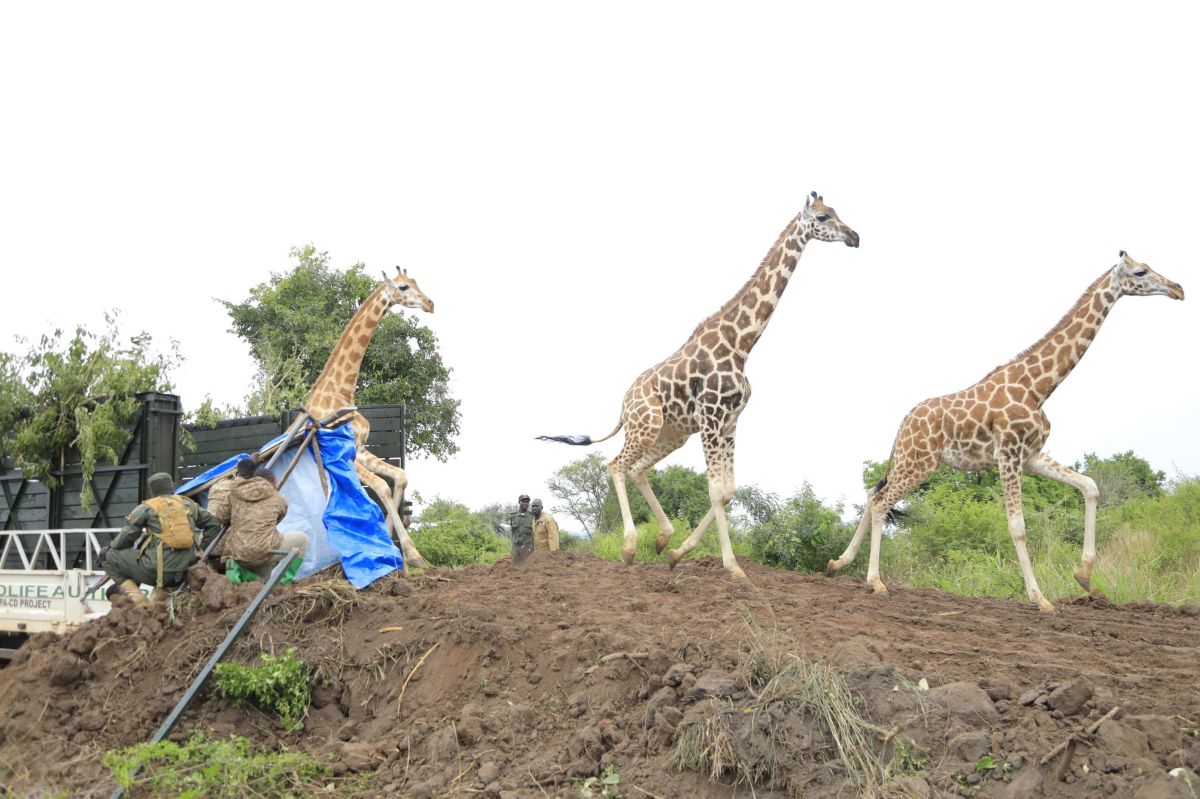

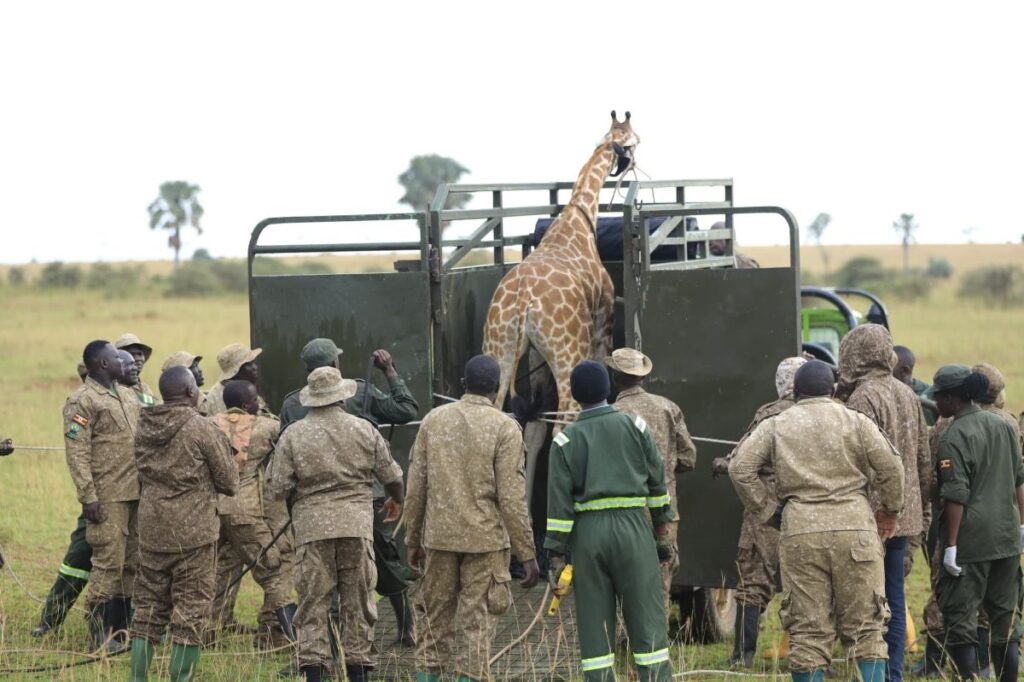
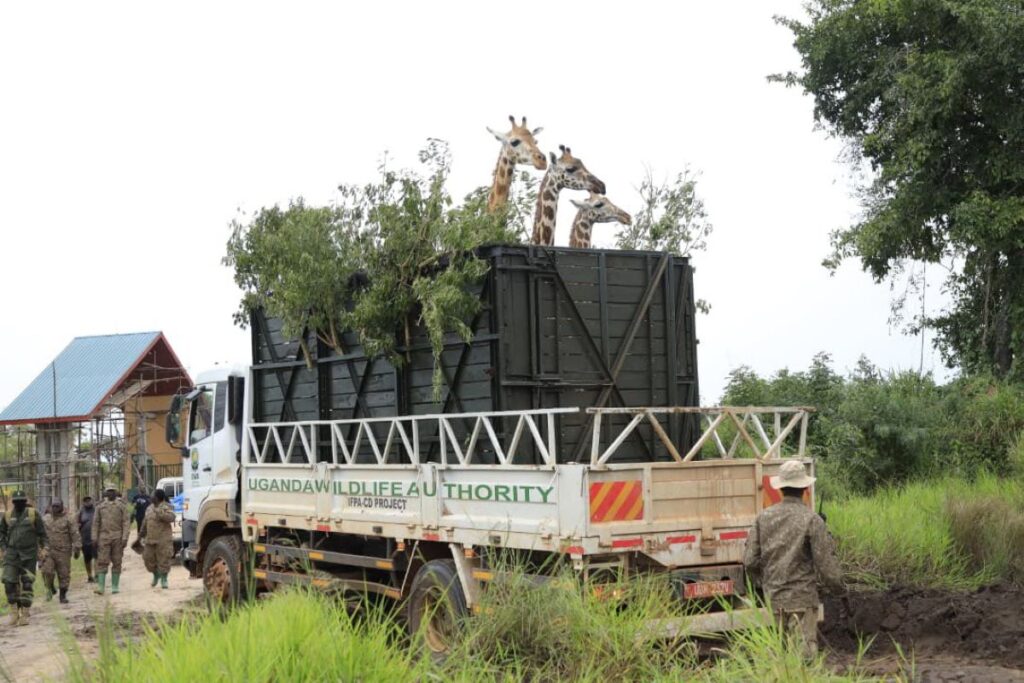
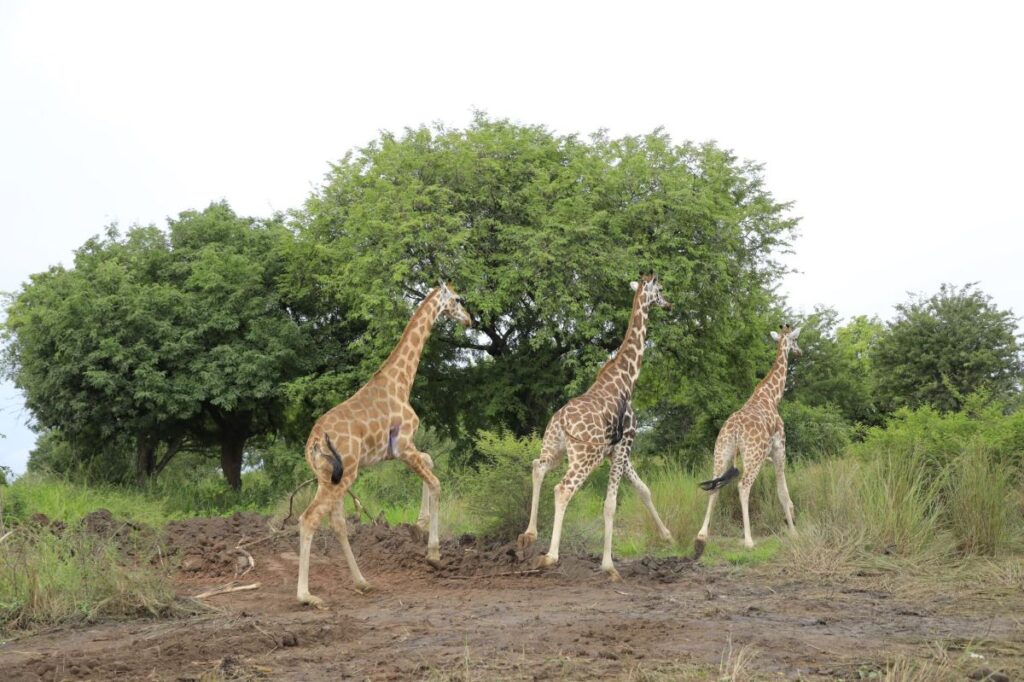
The Uganda Wildlife Authority (UWA) has successfully translocated three female Nubian Giraffes from Murchison Falls National Park to Ajai Wildlife Reserve in Madi-Okolo District, marking a fresh chapter in the country’s efforts to rescue one of Africa’s most threatened large mammals from extinction.
The exercise is part of a wider plan targeting the relocation of 12 Nubian Giraffes in total, aimed at spreading and growing the species’ population across multiple conservation areas, strengthening biodiversity, and diversifying tourism experiences beyond the traditional giraffe strongholds.
Dr. Patrick Atimned, UWA’s Assistant Commissioner of Veterinary Services and head of the translocation team, said the operation is guided by UWA’s Giraffe Conservation Strategy, developed with support from the Giraffe Conservation Foundation.
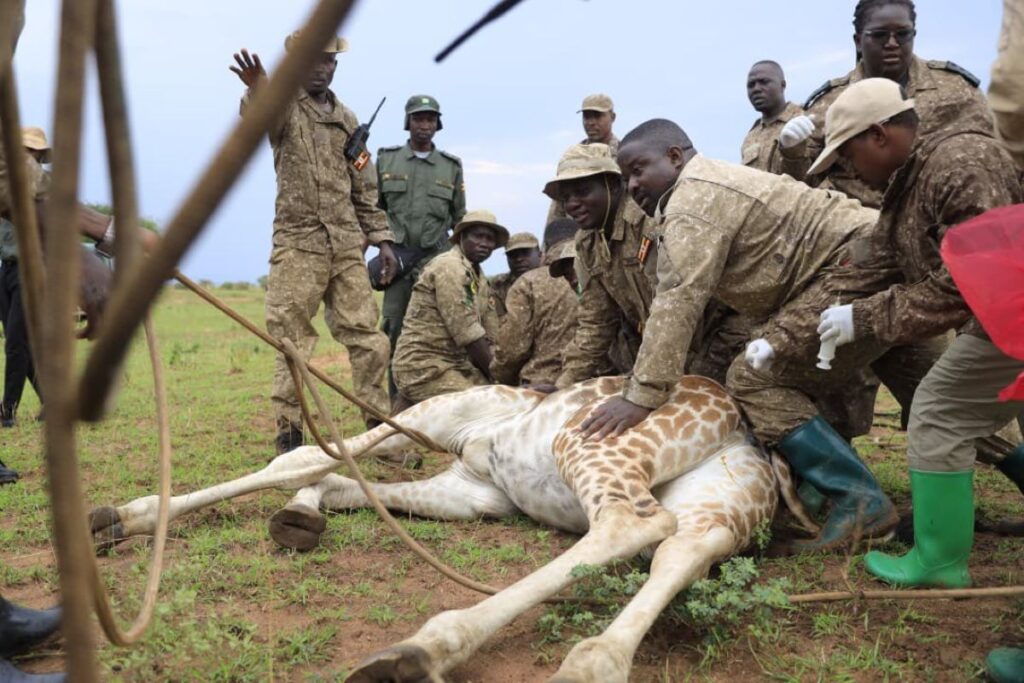
“The exercise strictly follows guidelines set by the International Union for Conservation of Nature (IUCN), which require translocations to be backed by sound scientific evidence, covering everything from habitat suitability assessments to genetic and health screening of the animals being moved,” Dr Atimned revealed.
This is not UWA’s first giraffe translocation. The programme dates back to 2015, when 15 Nubian Giraffes, four males and eleven females, were moved from the Murchison Falls Conservation Area to Lake Mburo National Park in what was the country’s pioneering giraffe relocation exercise.
Since then, UWA has carried out further translocations from Murchison Falls to the Uganda Wildlife Education Centre (UWEC), Pian Upe Wildlife Reserve, and Ziwa Rhino Sanctuary.
The latest move to Ajai Wildlife Reserve adds a new destination to that growing list. The three giraffes released so far join a reserve already home to Rhinos, Buffaloes, Zebras, and other herbivores, giving Ajai a more diverse wildlife profile and making it an increasingly attractive addition to visitors’ Uganda itineraries.
The Nubian Giraffe scientifically known as the Giraffa camelopardalis camelopardalis, sometimes called the Ugandan or Baringo giraffe, is the nominate subspecies of giraffe, meaning it was the first giraffe population ever formally described, giving its scientific name to the species as a whole.
Despite this historic distinction, the subspecies is now classified as Critically Endangered on the IUCN Red List of Threatened Species. Following a major taxonomic reclassification by the IUCN in August 2025, giraffes are now recognised as four distinct species rather than one, and the Nubian giraffe falls under the Northern giraffe (Giraffa camelopardalis), a species whose three subspecies inhabit often precarious areas across Western, Central, and East Africa, with only just over 7,000 individuals remaining in the wild, making it one of the most threatened large mammal species on the planet.
The Nubian giraffe’s own numbers tell an even starker story. The subspecies is classified as critically endangered, having lost roughly 98% of its population since the 1980s. The main threats driving this collapse include illegal hunting and poaching, with giraffes targeted for their meat, skin, and tail, as well as widespread loss of natural habitat due to human activities.
In parts of its range such as South Sudan, decades of civil conflict caused a near-total collapse of wildlife governance, leaving populations largely unmonitored and unprotected. Uganda today holds one of the most important strongholds for this subspecies, making UWA’s translocation programme not just a national conservation priority, but a globally significant one.
Moving giraffes to new, well-protected sites like Ajai serves several critical purposes for the species’ survival. It reduces extinction risk by ensuring individuals are not all concentrated in one location, where disease outbreaks, poaching pressure, or habitat degradation could wipe out a large share of the population at once.
It also helps restore genetic diversity by establishing new breeding populations in different conservation areas, while relieving pressure on source populations in parks like Murchison Falls, where giraffe numbers can outstrip the carrying capacity of the habitat.
Beyond the ecological benefits, spreading giraffe populations to reserves such as Ajai, Pian Upe, and Lake Mburo also boosts tourism revenue in these areas, strengthening the case for continued investment in wildlife protection nationwide.
Conservationists stress that Uganda cannot afford to be complacent. The Nubian giraffe’s dramatic decline elsewhere on the continent, driven by poaching, habitat loss, and conflict, is a warning of how quickly a seemingly stable population can collapse.
As one of the last remaining safe havens for the subspecies, Uganda carries an outsized responsibility in the fight to prevent its extinction.
Every Ugandan has a stake in this effort, whether through supporting responsible tourism, reporting poaching activity, respecting protected area boundaries, or simply raising awareness of the giraffe’s plight. As UWA continues its translocation programme toward the 12-giraffe target, officials are urging Ugandans and visitors alike to see reserves like Ajai not just as tourist destinations, but as frontlines in the battle to keep the Nubian giraffe from disappearing forever. Add Ajai Wildlife Reserve to your next itinerary, and be part of the story of a species being brought back from the brink.