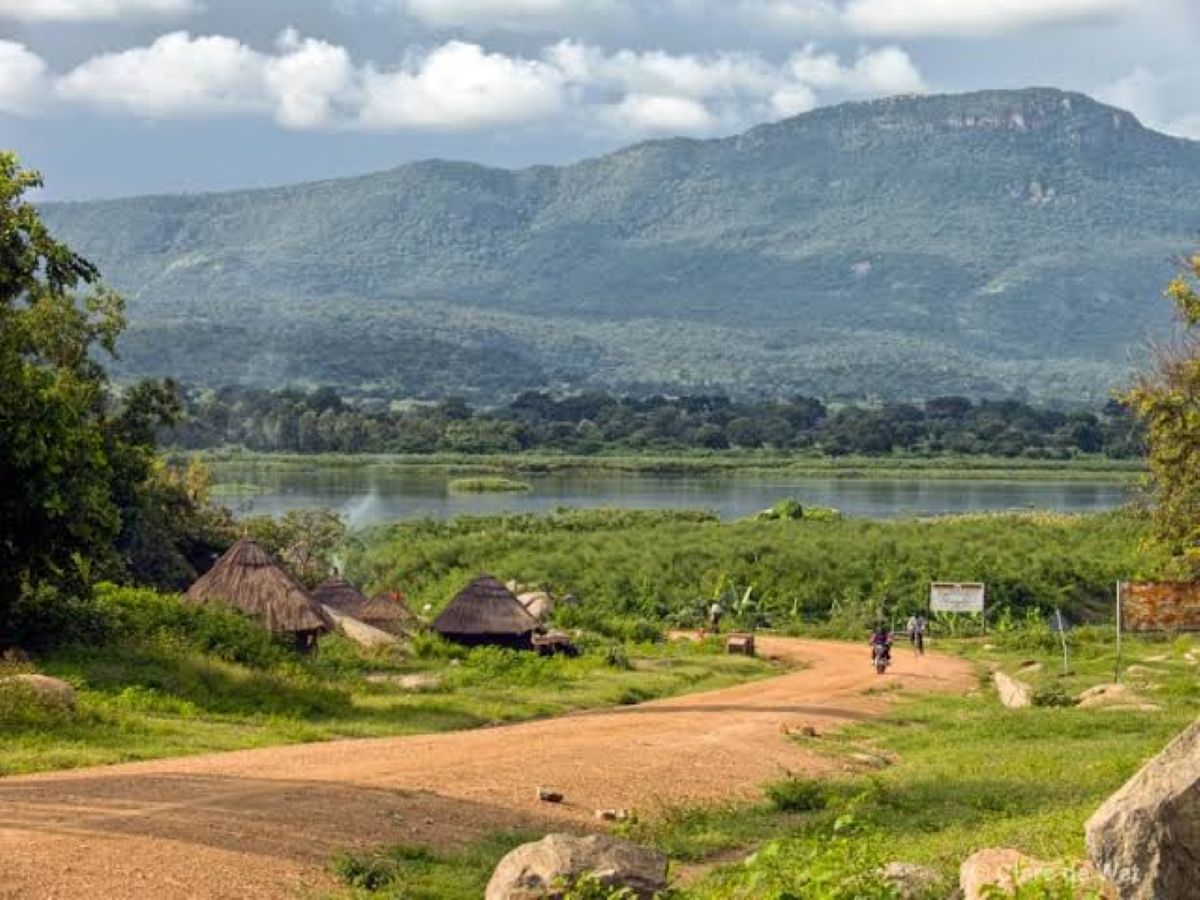

For years, the land around Uganda’s refugee-hosting districts told a familiar and worrying story. As settlements swelled with families fleeing conflict in South Sudan and beyond, the forests nearby bore the weight of that growth. Trees came down for firewood, poles, and building timber, often faster than nature could replace them.
Deforestation crept outward from the camps, thinning tree cover, drying out soils, and leaving both host communities and refugees competing for a shrinking resource. It was a quiet crisis, one measured not in headlines, but in the disappearing woodlands and the mounting economic and environmental pressures on communities already stretched thin.
That was the backdrop against which the Investing in Forests and Protected Areas for Climate-Smart Development (IFPA-CD) Woodlots Programme was born. Rolled out by the Government of Uganda through the Ministry of Water and Environment, with backing from the World Bank, the programme set out to do something ambitious: turn the very pressure that was destroying forests into a reason to grow more of them.
The plan was straightforward on paper assign tree-planting targets to districts hosting refugee settlements, get communities growing woodlots as a business, and let the resulting timber, poles, and firewood ease the strain on natural forests. In practice, the timing could hardly have been worse.
Launched in 2020, the programme collided almost immediately with the COVID-19 pandemic, which disrupted everything from farmer training sessions to the mobilisation of implementing partners on the ground. What was meant to unfold over five full years ended up compressed into a shorter window, forcing districts to catch up on lost time.
Despite that rough beginning, something remarkable happened: several districts didn’t just meet their targets, they blew past them.
Adjumani led the pack. Assigned a target of establishing 368 hectares of woodlots, the district ended up planting 544 hectares, nearly 50% more than expected, earning it the title of best performer across the entire programme.
It wasn’t alone. Amuru pushed past its 412-hectare target to reach 482 hectares. Moyo turned a 184-hectare goal into 219 hectares on the ground. Lamwo grew 291 hectares against a 255-hectare target. And Obongi delivered perhaps the most striking leap of all, nearly doubling its modest 93-hectare target with 160 hectares of new woodlots.
Behind these numbers is a shift in mindset that programme officials say was just as important as the hectares themselves. Denis Emmanuel Oweka, Regional Coordinator for the IFPA-CD Project in the West Nile North-East region, explained that the initiative was never just about planting trees for their own sake, it was about building a supply chain rooted in community livelihoods.
“The objective of the project is to supply timber, poles and firewood to refugee-hosting areas while also increasing tree cover and contributing to climate change mitigation,” Oweka said, describing how the constant demand for forest products inside the settlements could become an economic opportunity rather than a source of conflict over dwindling resources.
“We are looking at tree growing as a business. Communities living near refugee settlements have an opportunity to supply timber, poles and firewood directly to the camps, creating an additional source of income for households,” he added.
That reframing of forests as something to be protected from people, to forests as something people could profit from, ran through every part of the programme’s design.
A consortium of implementing partners made it happen: NIRAS, the Environmental Conservation Trust of Uganda (ECOTRUST), Havilah Company Limited, and Green Life International each played a role, with ECOTRUST taking the lead on mobilising communities, engaging farmers, and delivering training. Their work went beyond handing out seedlings.
Farmers were coached in land preparation, correct spacing, pitting, weed control, and pest management, the unglamorous fundamentals that determine whether a young woodlot survives its critical early years or withers before it can produce a single pole.
The programme also introduced a concept it called the “Vision Road Journey,” encouraging farmers to think years ahead and treat their woodlots as a long-term investment rather than a one-off environmental gesture.
Species selection mattered too. Many farmers planted fast-growing clonal eucalyptus, which can reach maturity in just three to five years a quick enough turnaround to give households an early return on their labour.
Others invested in Tectona grandis, or Sudanese teak, a slower but far more valuable timber species that takes eight to fifteen years to mature. Together, the two species gave farmers a mix of near-term income and longer-term wealth, hedging their bets across different time horizons.
Beyond the household economics, officials point to a broader payoff: every hectare of new woodlot adds to carbon sequestration, helps stabilise local air quality, and builds resilience into landscapes that had been under mounting environmental strain.
In that sense, the trees now standing in Adjumani, Amuru, Moyo, Lamwo, and Obongi are doing double duty, generating income for the households that planted them while quietly working to offset some of the climate and ecological costs of rapid, unplanned deforestation.
As the IFPA-CD Woodlots Programme winds down, its architects are keen to stress that this isn’t the end of the story. The plantations now maturing across these districts are meant to serve as proof-of-concept evidence that commercial forestry can thrive even in some of Uganda’s most resource-stressed communities.
For stakeholders watching the programme close out, the real measure of success won’t just be the hectares planted, but whether this model of turning environmental necessity into economic opportunity outlives the project itself, drawing further investment into sustainable forestry and the restoration of Uganda’s degraded landscapes.